
Realism to Impressionism
A quick depiction of societal change

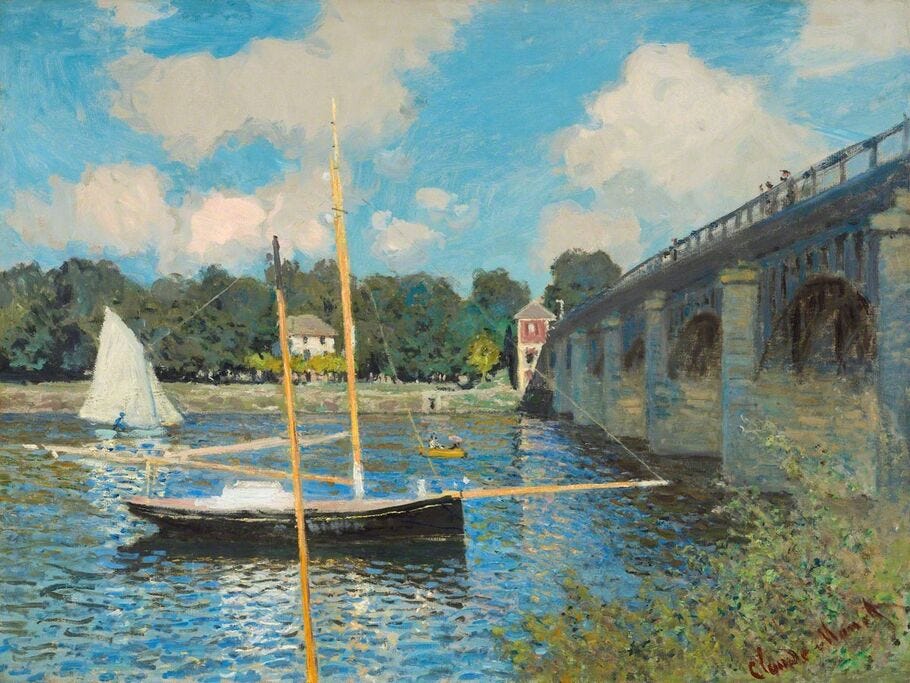
Claude Monet, The Bridge at Argenteuil, 1874
Though synonymous with the development and advancement of painting and illustration, the Impressionist movement transcended many forms of artistic and creative expression. Impressionism formulated a literary and rhetorical movement that advanced realism and naturalism as principles for understanding and viewing the surrounding environment (Shiff, 1988). The literary Impressionist movement, much like the artist movement, advanced upon this stringent application of human understanding and interpretation, founded in realism, by allowing expression and perspective through an array of outlets (Fried, 2018). The Impressionist movement encouraged and elucidated a degree of vagueness that inspired emotional reflection and an appreciation for fluidity (Mcgegan, 1905). Moreover, the movement gained further traction in artistic expressions such as performance, music, and photography (AI bawi & AI kaabi, 2021; Matthys, 2020), leading to stylistic choices and efforts to incorporate visual art techniques in “coloristic articulations” (Elisha, 2014, p. 73). The movement’s chief concern with accurate and fleeting reflections is cognizant of the changes Western European society experienced, particularly the movement towards increased recreational activity, specifically among those holding labor positions in French society. Beyond this, the changes in development and urban sprawl become critical topics of representation in much of the art depicted by the impressionists.
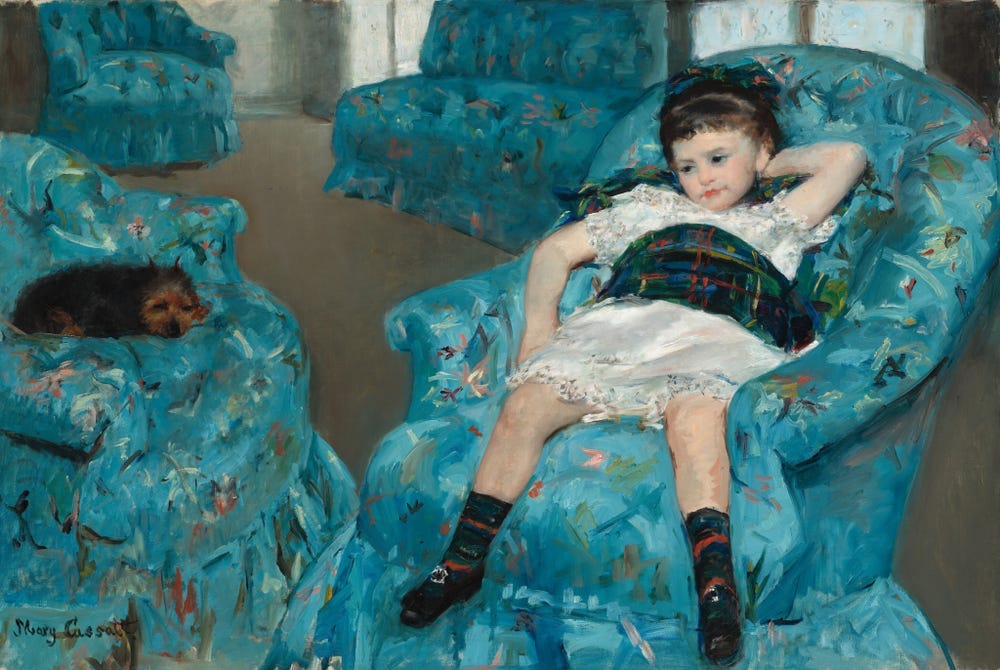
Mary Cassatt, Little Girl in a Blue Armchair, 1877
In the early 19th century, Western Europe became overwhelmed by the continued growth of the Industrial Revolution. Laborers worked tirelessly to promote capitalist goals of exponential growth at the cost of quality of life. Similarly, the Napoleonic wars had reshaped the political landscape, sowing much instability (Caiani, 2017). Moreover, the increased tension of democratic governance vs monarchy ruling caused further political upheaval and saw the creation of several wars across Europe (Riotte, 2020), including the July Revolution and the Springtime of Nations revolts. Chronological considerations of artistic movements saw the development of Romanticism, concerned with the removal from lived reality to emphasize the subline, mystery, and escape (Kravitt, 1992). Following this, Realism transcended through European artistic institutes best comprehended as depictions concerned with “careful(ly) observing in all detail… the result… an exact replica of the original” (Gibbs, 1952, p. 175).
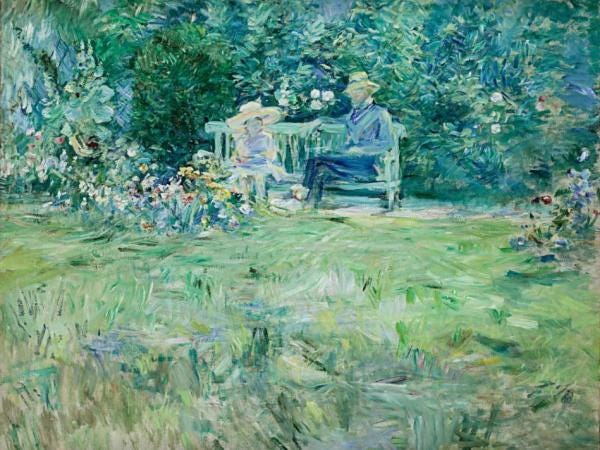
Berthe Morisot, The Lesson in the Garden, 1886